A Grand Public Space
Just outside the main city gate, Emperor Constantine built a large public square called the Forum of Constantine. This area became one of the city’s most important gathering places. The forum had an elliptical shape (oval) and was paved with large stones. Around it stood two levels of porticoes, which were covered walkways supported by columns—perfect for shade and shelter Sofia Daily Tour.
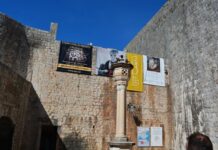
At each end of the forum’s longer axis stood a tall marble archway, creating impressive entrances. In the very center stood a huge column made of porphyry, a rare and expensive purple stone. On top of the column was a statue of Apollo—but with the face of Constantine himself. The figure wore a crown with seven rays, symbolizing the sun, as if the emperor was shining over the city he had built.
On the north side of the forum, Constantine built a Senate House, where important government decisions were made.
The Tetrastoon Becomes the Augustaion
Another important square in the city was the Tetrastoon. Constantine expanded and decorated this space and renamed it the Augustaion to honor his mother, Helena, who held the title Augusta (meaning empress or noble lady).
In the middle of the Augustaion, a statue of Helena was placed on a column made of porphyry, adding to the beauty and symbolism of the square. This area later became a key space in front of the city’s most important churches and palaces.
The Completion of the Hippodrome
The Hippodrome, or racecourse, was also completed during this period. It became known as “the center of Byzantine life.” The Hippodrome hosted chariot races, parades, and public events. It also held famous monuments, such as the Serpent Column, which had originally come from the sanctuary of Delphi in Greece Transformation of Byzantium into Constantinople.
Baths and Palaces
Next to the Hippodrome were the Thermae of Zeuxippus, a set of public baths. Constantine had these renovated and improved to make them more beautiful and comfortable.
Nearby, the emperor also built a new Imperial Palace. Its main entrance faced the Augustaion, and the palace itself stood to the east of the Hippodrome. This location was chosen carefully—it resembled how the Palace of the Caesars in Rome overlooked the Circus Maximus, the main racecourse there.
A Palace with a View
The new palace also had a breathtaking view. From its balconies and windows, one could see the Sea of Marmara, the Prince’s Islands, the green hills of Asia Minor, and even the snowy peaks of Mount Olympus in Bithynia.
Two ancient historians praised the palace. The Christian scholar Eusebius called it “most magnificent,” while the pagan historian Zosimus said it was almost equal to the Imperial Palace in Rome.
Under Constantine’s rule, the city was not only well defended but also beautifully organized. From the Forum of Constantine and the Augustaion to the Hippodrome, baths, and the imperial palace, Constantinople became a model capital—blending Roman tradition, imperial power, and Christian symbolism in its design and structure.